

Wind Resource Assessment
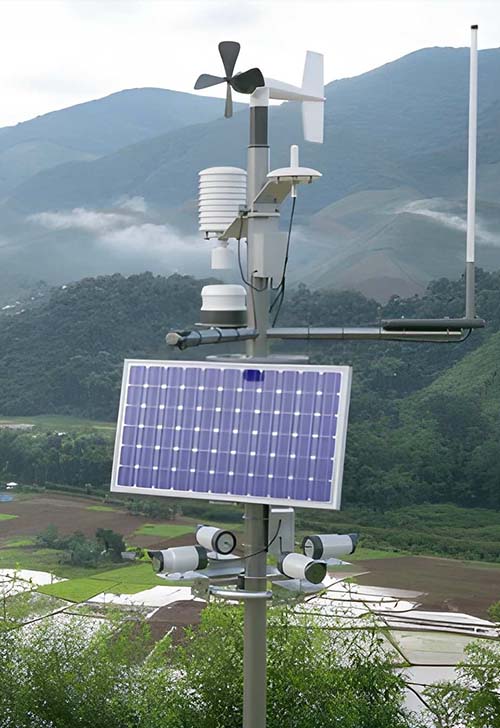
Buraq Integrated Solutions provides turnkey wind-resource assessment and power-performance systems built to meet IEC 61400-12-1 standards. These systems offer a wide range of sensors for wind speed, wind direction, air density, and power measurements. Data is stored locally on the data logger and can be transmitted using all standard communication methods.
Application: Wind Resource Assessment
Accurate WRA is essential for evaluating wind-farm potential. Developers need reliable tower-mounted systems that measure wind speed, direction, temperature, and pressure at multiple heights to ensure continuous, consistent data. Remote sites benefit from robust communication options that allow off-grid monitoring. Buraq’s instrumentation, data loggers, and communication systems provide a complete, reliable WRA solution tailored to site requirements.
Data Loggers for Wind Monitoring
Buraq data loggers serve as measurement units, PLCs, or RTUs. Their versatile channel types allow a single logger to measure multiple parameters—such as turbine-blade strain, wind speed, and power output—while controlling external devices.
CR1000 with LLAC4: supports up to 10 low-level AC anemometers.
CR200X series: ideal for wireless deployments when avoiding long cable runs.
Designed for harsh environments, these loggers operate on batteries/solar power, store millions of data points, and retain accurate time-stamped records.
Measurement Capabilities
Data loggers support multiple channel types—analog, digital, pulse, and switched excitation—programmable for various sensors. Most sensors connect directly, and multiplexers can be added to expand capacity.
Control Capabilities
Advanced instruction sets allow automated control and event-based actions—such as triggering alarms, shutting down equipment, or sending notifications—without human intervention.
Wind Monitoring Sensors
Systems can integrate almost any sensor, including sonic anemometers, 3-cup/propeller anemometers, wind vanes, temperature sensors, solar radiation, current, voltage, resistance, and power sensors.
Communications
Flexible communication options include radio, telephone, cellular, satellite, Ethernet, and voice-synthesized reporting. Systems can automatically send alerts or transmit site conditions to computers, phones, radios, and pagers.
Software
User-friendly PC software streamlines programming, data retrieval, and analysis with robust data-integrity checks. Options are available for automated data posting to the internet.